
Signal detected.
It doesn't begin in a lab. It doesn't arrive with an announcement.
It appears.
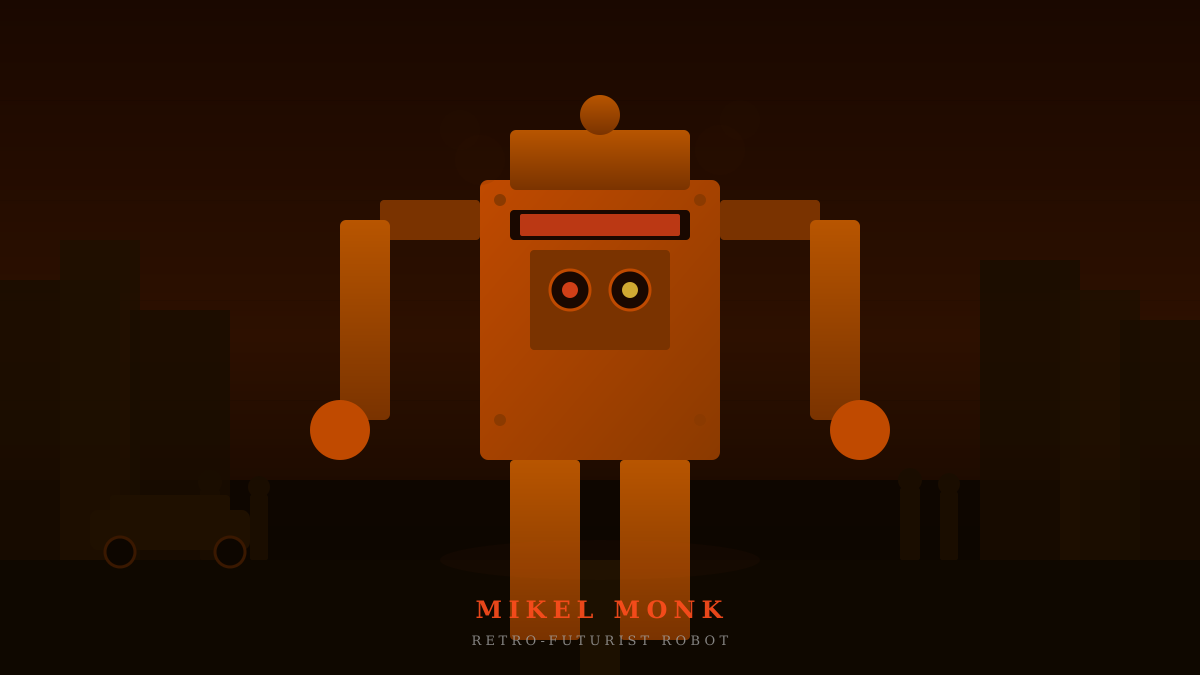
A machine stands in the middle of the street. People stop. They look. They don't understand what they're seeing yet—but they feel it.
Something has changed.
The signal is no longer digital. It has entered the physical world.
The Shift from Digital Intelligence to Physical Presence
For decades, artificial intelligence has existed behind screens—hidden in algorithms, cloud systems, and invisible infrastructures. It shaped what we see, what we buy, and even what we believe.
But in 2026, that boundary is collapsing.
AI is no longer confined to software. It is now embedded in machines that move, observe, and act within the physical environment. Robotics, powered by advanced machine learning models, is turning intelligence into presence.
This is more than technological progress. It is a transformation of reality itself.
From Code to Concrete
- Algorithms are becoming autonomous systems
- Data is turning into movement
- Software is becoming machinery
Factories were the first to adopt automation. Then came warehouses, logistics, and delivery systems. Now, machines are stepping into public spaces—streets, cities, and everyday life.
Why This Moment Feels Different
We've seen machines before. We've seen robots in factories, drones in the sky, and automated systems in controlled environments.
But this is different. Because this time, the machines are not hidden. They are visible. They are present. And most importantly—they are intelligent.
The Psychological Impact
- People begin to question control
- Trust becomes a central issue
- The line between human and machine becomes blurred
The future is no longer something we imagine. It is something we encounter.
The Rise of Autonomous Systems
At the core of this transformation is autonomy. Modern AI-powered machines are not just following instructions. They are making decisions in real time.
Key Capabilities
- Computer vision (seeing the environment)
- Sensor integration (understanding space)
- Real-time learning (adapting behavior)
- Decision-making models (choosing actions)
Smart Cities and Machine Integration
The next phase of urban development is not just digital—it is hybrid. Smart cities are evolving into environments where machines and humans coexist in real-time systems.
What This Looks Like
- Autonomous transport systems
- AI-managed traffic and logistics
- Robotic maintenance and infrastructure
- Connected environments reacting to data
The Economic Impact of Physical AI
Industries Being Transformed
- Logistics and delivery
- Construction and infrastructure
- Manufacturing
- Security and surveillance
The New Workforce
- Operators will manage machines
- Technicians will maintain systems
- Analysts will interpret machine data
The human role shifts from execution to supervision.
Ethical Questions We Can't Ignore
- Who is responsible for machine decisions?
- How do we ensure safety in public environments?
- What happens when machines fail?
Unlike digital systems, physical machines have real-world consequences. This makes regulation, accountability, and transparency critical.
The Blurring Line Between Sci-Fi and Reality
For years, science fiction imagined a world where machines walk among humans. That world is no longer fictional.
The aesthetics of retro-futurism—massive machines, industrial forms, human-scale encounters—are becoming real design references. Technology is not just evolving functionally. It is evolving visually and culturally.
What Comes Next?
- Machines working alongside humans
- Shared environments
- Adaptive ecosystems
How do we adapt to a world where intelligence is no longer invisible?
Conclusion: The Signal Has Changed
We are entering a new era. An era where technology is no longer hidden behind screens. Where intelligence has form. Where systems have presence.
The signal is no longer digital. It is physical.